Book Review
Superbike: An Illustrated Early History, By Kevin Cameron and John Owens
There have been books published about the Superbike World Championships, about some of the machines raced in Superbike racing and of course bio books on several leading Superbike riders. But when it comes to AMA Superbike racing specifically, I can think of no books dedicated to the subject, outside of a pair of self-published photo books. So it was with great interest I approached a new book Superbike: An Illustrated Early History by renowned technical writer Kevin Cameron and acclaimed photographer John Owens and edited by respected editor Matthew Miles. I came away impressed.
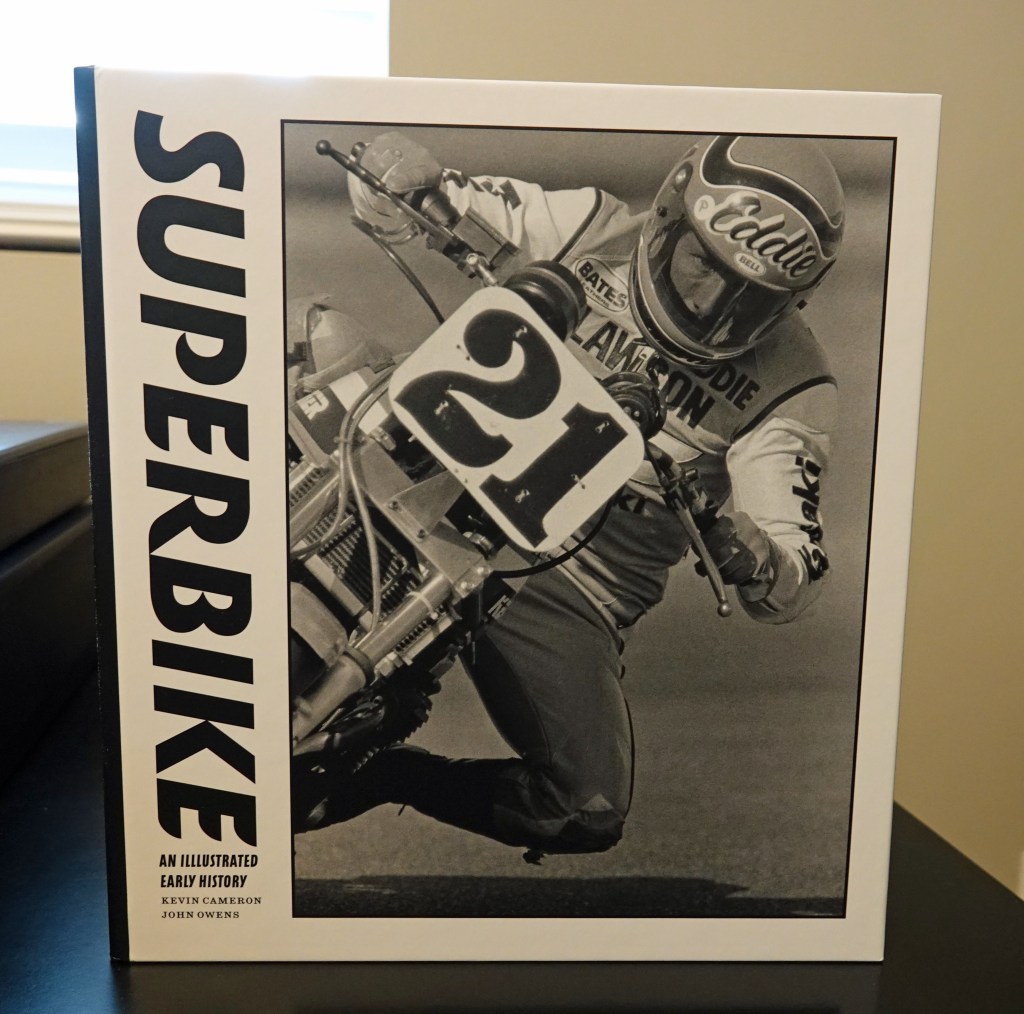
Cameron was the perfect, albeit somewhat ironic, person to cover the subject of the early years of AMA Superbike racing. Perfect because no one has delved into the technical aspects of Superbike racing quite like Cameron has over the years. Ironic in that when Cameron was a tuner, he was best known for his work on two stokes in the old AMA Formula One and 250 Grand Prix Championships. There was a vocal group of enthusiasts, racers and even journalists at the time who were not wholeheartedly in favor of the AMA’s move away from two-stroke racing as the premier class for road racing in the mid-1980s and, as I recall, Cameron was among those voices.
“It was certainly a step backward, from bikes made with racing in mind to 1960s tires, suspension and chassis carrying the entire weight of a 250 in the form of a giant air-cooled four-stroke,” Cameron would later explain.
But, in spite of being made for racing only, fans had grown weary of the parade of Yamaha TZ750s that dominated AMA National Road Racing in the early 1980s and attention shifted to the upstart Superbike class, with its young and talented riders racing mostly homebrewed hotrod production bikes.
Superbike: An Illustrated Early History explains how and why that transition happened and this seminal period of motorcycle racing in America, which later spawned the Superbike World Championships, which at one point in the late 1990s rivaled and perhaps even in some countries eclipsed the popularity of Motorcycle Grand Prix racing.
Turning big-bore production motorcycles into race bikes was a major undertaking and the builders who managed it best became stars of the sport on par with many of the leading riders. The technical improvisations and rules bending of legendary builders such as Pops Yoshimura, Udo Geitl, Reno Leoni, Pierre des Roches, Todd Schuster, Phil Schilling and Rob Muzzy, just to name a few, are well covered. Many of the tricks of passing AMA technical inspection, now decades removed, can finally be told.
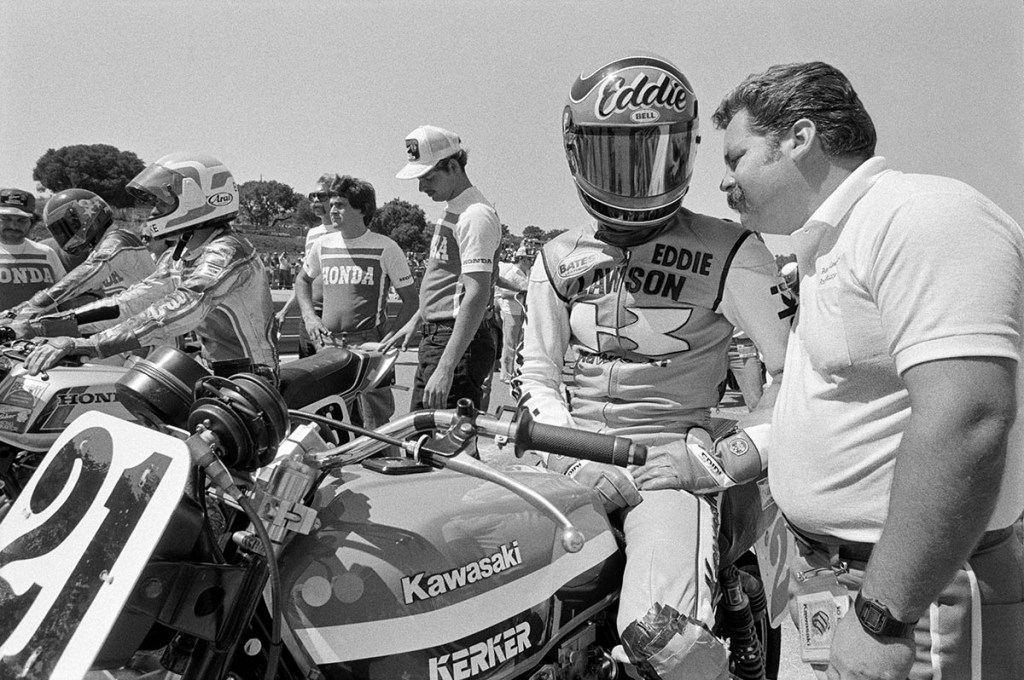
Owens innately understood and appreciated the all-important work the mechanics did behind the scenes and was careful to capture their work on film when most other photographers focused solely on the riders and machines, mainly on track. Owens was technically savvy enough himself to understand what parts were unique, intriguing, and sometimes outright game changing. He also took meticulous detail shots of engines, suspensions, brakes, wheels, swingarms and other heavily fabricated performance bits and pieces of Superbike racing.
If you are looking for who won what and where, you won’t find that here. And the personalities of the riders take a back seat to the intricacies of the machines. That would be a minor criticism. Instead, you’ll get a detailed inside the garage feel for the motorcycles that made AMA Superbike racing the breakout star of all of motorcycle road racing in the 1970s and ‘80s. So epic was the series, that it became one of America’s most popular exports in all the world of motorsports.
How were they able to make BMWs corner without slamming the bike’s Boxer cylinders into the pavement? Why were Michelin PZ4 front tires preferred in the early Superbike era? Why did four-into-one exhaust systems fade away? How did Freddie Spencer make a winning transition from two-strokes to Superbikes so seamlessly? These questions and many more are answered in this book.
Owens has an amazing eye for detail. Items most photographers would overlook, like a bowl full of discarded sparkplugs for example, become almost abstract art for Owens. His images beautifully convey the early era of Superbike racing. Hand processed black and white Kodak and Ilford film, shot mostly with Nikon cameras and lenses, was the standard of motorcycle racing in the 1970s and early ‘80s. Black and white images look classic if reproduced properly and Owens’ expert camera and lab work assured top-notch source material to work with. Owens credited Jim Rohan for turning the raw digital scans into the tonally rich, gorgeous images you see on the page.
This 191-page hardbound book is a must have for anyone who is or was a fan of Superbike racing at any point in their life.
To order “Superbike: An Illustrated Early History,” visit Superbikebook.com
 Rider Files
Not seeing anything so far about how the term Superbike was coined in Australia, where it really started. I can’t wait for the book about how Americans invented Speedway as well. Oh oh and Motocross….we’ll see….
LikeLiked by 1 person
Kerry,
Will you at least give us Flat Track? 🙂
LikeLike
Why would anyone associate Australia with Superbike Racing that was based in America? PAGE 15 of the book says AMA. That’s short for AMERICAN motorcycle association. Maybe you should talk with your Australian technical writers and build a book that is Australian based?
You have had @50 years to set the record straight and get the credit you think you deserve.
LikeLiked by 1 person